)
Livestock Tech Needs Smarter Capital, Not One-Size-Fits-All Investment Models
Investment in livestock technology is accelerating, but lasting transformation will hinge on how effectively capital is allocated and scaled.
Record-high beef prices, tightening inventories, rising climate scrutiny, and rising global protein demand are pushing producers to rethink productivity and resilience across beef, dairy, poultry, and swine. At the same time, innovation is accelerating: smarter diagnostics, precision monitoring, data-driven nutrition, and emissions-reduction tools are moving from pilot to practice.
Yet livestock is not software. And capital models built for fast-scaling digital platforms don’t always translate neatly to biologically complex, commodity-driven systems. The challenge facing investors today is not whether to invest in animal agtech, but how.
Biology sets the pace, not fast-tracked scaling
Livestock innovation runs on biological timelines; animals grow at their own pace, disease cycles are unpredictable, and on-farm validation takes seasons. Additionally, adoption hinges on trust, risk tolerance, and margins that leave little room for error.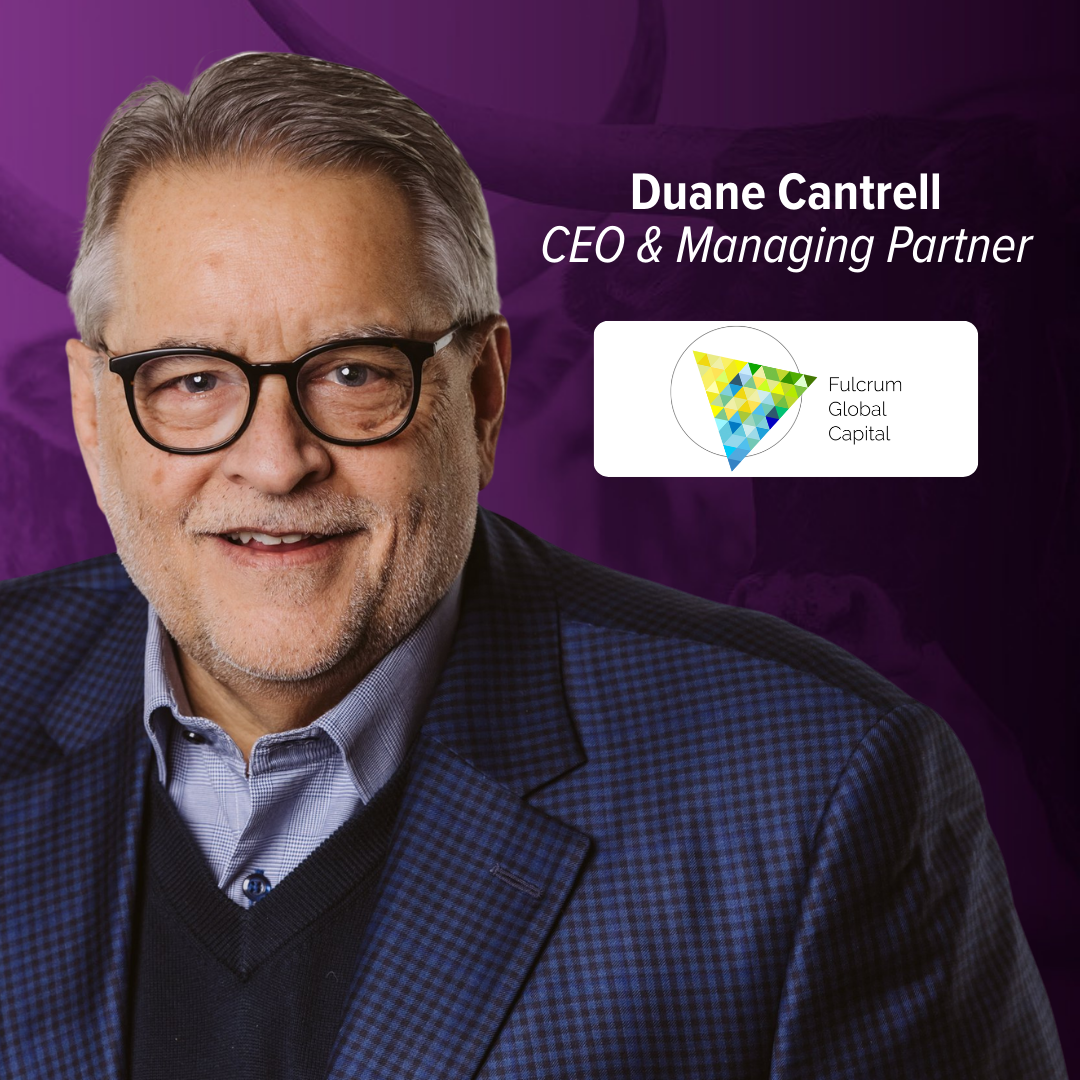
“Innovation to commercialization takes longer, particularly given the biological nature of livestock production,” says Duane Cantrell, CEO & Managing Partner at Fulcrum Global Capital. As a result, he notes, timelines often “don’t meet traditional expectations for exit windows typical for venture financing.”
Rob Trice, Partner at Better Food Ventures, echoes this reality from a market perspective. “We see great technology solutions that make sense,” he says, “but if the customer – for whatever reason – isn’t buying because the cost-benefit equation doesn’t work for them right now, the start-up is out of luck.”
These dynamics make livestock tech fundamentally different from consumer or enterprise software, where adoption is faster and scaling is less constrained by physical systems.
Venture capital’s role and its friction points
Venture capital plays a critical role in livestock tech, especially at the earliest stages. It enables experimentation, funds pilots, and gives founders the runway to test solutions in real production environments. But both Cantrell and Trice are clear-eyed about its limits.
 “If venture capital is defined narrowly as only succeeding through 10x returns and ringing the bell on Wall Street for an IPO,” Trice argues, “then venture’s fit with livestock-based production may be quite limited.” A more realistic model, he suggests, is early-stage capital targeting “a capital-efficient 3–5x return via strategic M&A.”
Misalignment has been costly. “Over the past decade of ‘free money,’” Trice says, “some investors applied a realistic lens to the space, others chased ‘go big or go home’ narratives – and honestly, that misalignment has mucked things up.”
Cantrell points to risk and valuation as persistent challenges. “Commercialization risk and speed of adoption are often vastly different than in other sectors,” he explains. Early-stage animal agtech valuations, he argues, must be adjusted to reflect those realities rather than imported wholesale from other tech markets.
Scaling across species is not a one-size-fits-all
Scaling in livestock is further complicated by species-specific differences.
“Beef, dairy, poultry, and swine systems are very different,” Cantrell says, citing differences in fragmentation, integration, animal life cycles, and individual animal value. While cross-species platforms may be attractive from a returns perspective, founders must understand “the fundamental market differences in each species” or risk stumbling as they scale.
For digital-first investors, Trice highlights two recurring challenges: crowded competitive landscapes and market timing. Even strong technology can stall if producers aren’t economically or operationally ready to buy.
Where private equity steps in
This is where private equity and growth-stage capital become essential.
“There is a need for more investment options in the livestock sector from early stage and venture,” Cantrell notes, “but the largest gap is the rather limited PE focus on animal agtech that bridges venture to strategic acquisition or roll-up of point solutions.”
While somewhat limited, private equity is already playing a role in tech adoption across livestock infrastructure. From cold chain (Bay Grove in Lineage Logistics) to feeding operations (AGR Partners in Cobalt Cattle), Trice points to examples where PE-backed firms have injected capital, modernized operations, and funded technology adoption – including dedicated data science capabilities – in parts of the value chain that were otherwise capital-constrained.
In short, VC fuels innovation while private equity fuels scale. The models work best sequentially, not competitively.
Climate capital: the missing overlap
Climate-focused capital is increasingly shaping investment priorities, but livestock remains a blind spot.
“For so many climate and impact-focused LPs, ‘meat’ is a four-letter word,” Trice says. Rather than engaging with the industry to improve performance, many investors have favored alternative proteins, despite slow adoption and limited market share gains.
Cantrell argues that a pivot is overdue. “If those same funds would focus on technologies in the livestock sector that address climate concerns and meet growing protein demand,” he says, “it would be of great benefit to the industry.”
Both investors agree that momentum must come from climate capital willing to engage with livestock realities and from strategic players already embedded in the sector.
Matching capital to reality
The future of livestock innovation doesn’t belong to a single investment model.
Venture capital plays a critical role in fueling early innovation. Private equity plays an equally critical role in scaling what works. Each dominates at different life stages and in different categories of animal agtech.
The next three to five years will determine which technologies break through, and which investment approaches prove best at turning promise into performance.
These conversations will be central at the Animal AgTech Innovation Summit, taking place April 8-9 in Fort Worth, where investors, producers, and technology leaders will examine how smarter capital deployment can accelerate adoption and deliver real results for animal agriculture. Join Rob Trice and Duante Cantrell as they take the stage to dive deeper into the current challenges and opportunities in the industry.
)
)
)
)
)